
South Australia deli bag regulations are a key concern for Australian delis, butcher shops, seafood retailers, supermarkets and food manufacturers, who need packaging that protects food and meets the requirements of its intended use. In South Australia, businesses must also understand specific restrictions on plastic barrier bags, including upcoming changes that affect unpackaged meat, dairy products and seafood.
Understanding South Australia deli bag regulations involves two important considerations: whether a bag meets the state’s compostability and labelling requirements, and whether its material suits direct contact with the food it carries.
Environmental Resources supports a more sustainable future through its range of compostable and biodegradable products. Food businesses can make informed packaging decisions by understanding certification, migration testing and product suitability while maintaining food safety and efficient daily operations.
What Are the South Australia Deli Bag Regulations?
South Australia’s single-use plastic rules restrict certain plastic barrier bags that delis and food retailers commonly use. A barrier bag usually refers to a bag without handles that protects or contains products.
According to the South Australian Government’s official barrier bag guidance, the restrictions cover two main stages.
Restrictions effective from 1 September 2024
From 1 September 2024, South Australia prohibited non-AS-certified-compostable plastic barrier bags that retailers use for unpackaged fresh fruit, vegetables, nuts and confectionery.
The restrictions also cover additional barrier bags that retail customers use to provide leak protection around meat, poultry, fish, seafood, herbs and flowers that retailers have already packaged.
Restrictions commencing on 1 September 2027
From 1 September 2027, South Australia will prohibit non-AS-certified-compostable plastic barrier bags that retailers use to contain or protect unpackaged dairy products, meat, poultry, fish and seafood.
As of October 2026, businesses have less than a year to prepare for this next stage.
South Australian businesses should review the official guidance because the rules cover specific products and uses, and some packaging applications fall outside the restrictions. When an exemption applies to an AS-certified compostable barrier bag, the business must also meet the relevant labelling requirements.
Why Migration Testing Matters for Deli Bags
Compostability certification and food-contact safety answer different questions.
Compostability certification assesses whether a product meets the relevant compostability standard. Food contact material migration testing, by contrast, examines whether substances from packaging can transfer into food under specified conditions.
Under Standard 3.2.2 of the Australia New Zealand Food Standards Code, food businesses must use packaging that suits its intended purpose and does not contaminate food. The Food Standards Australia New Zealand (FSANZ) food packaging guidance identifies chemical migration, physical contamination and poor packaging hygiene as potential concerns.
For example, a bag that a retailer uses for dry confectionery may need different performance characteristics from a bag that holds moist cheese, oily deli meats or acidic marinated vegetables.
Businesses should assess these factors before selecting packaging:
- Food type: Consider acidity, fat content, moisture and other relevant food characteristics.
- Contact time: Assess how long the food will remain in contact with the bag.
- Temperature: Consider refrigeration, room-temperature display and other intended conditions.
- Material suitability: Check the manufacturer’s documentation for the intended food-contact application.
These checks help businesses and testing specialists determine whether they need further testing and which test conditions suit the application.
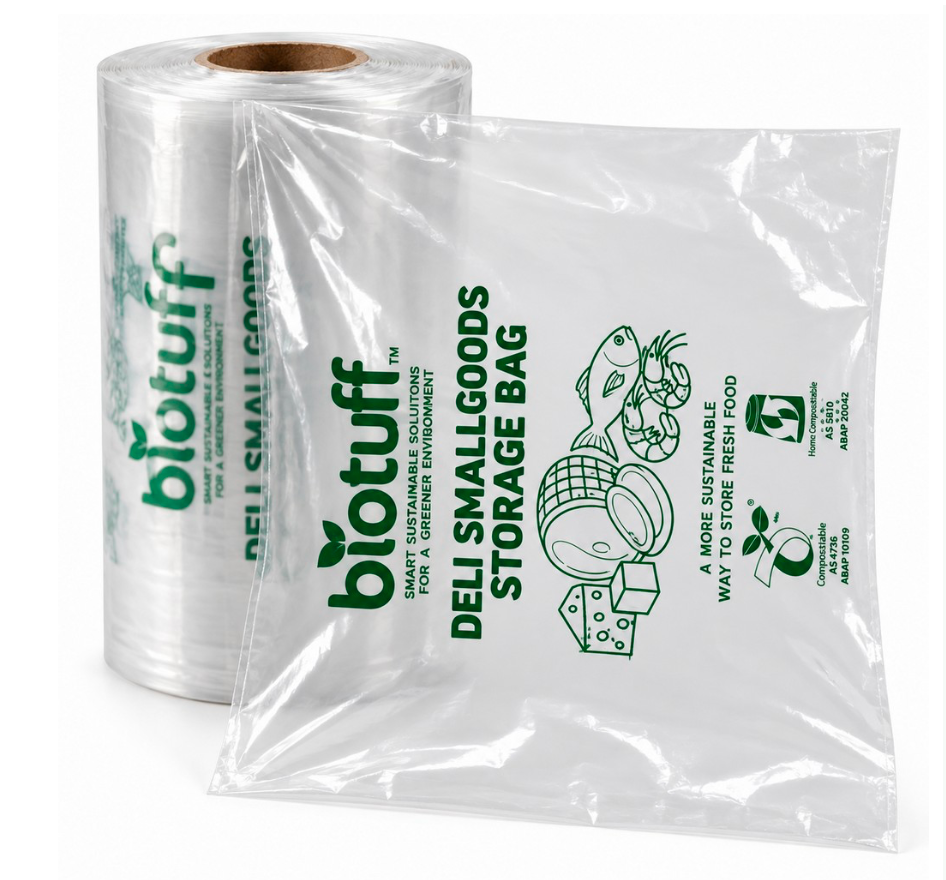
Compostable Deli & Meat Bags
Place your order for eco-friendly Compostable Deli & Meat Bags At an affordable price only on Biotuff.
What Is 3% Acetic Acid Migration Testing?
3% acetic acid migration testing uses a dilute acetic acid solution as a food simulant in specified food-contact testing procedures. Under European Union plastic food-contact rules, this simulant represents acidic foods with a pH below 4.5.
During the test, a laboratory exposes the packaging material to the simulant under defined time and temperature conditions. The results help specialists assess whether certain substances migrate from the packaging into the simulant.
The testing protocol must match the intended application and the relevant regulatory framework. The European Commission’s food-contact material guidance explains how food simulants, migration limits and compliance documentation support this assessment.
However, 3% acetic acid migration testing does not provide a universal assessment for every deli bag. A laboratory or packaging specialist must determine the appropriate simulants and conditions by considering the material, food type, contact duration and temperature.
For example, acidic pickled vegetables may require a different assessment from fatty meat products. A supplier should not claim that one test proves a bag’s suitability for every food application.
Before approving a bag, ask your supplier or testing laboratory to confirm:
- Which food types and packaging materials the assessment covers.
- Whether the test conditions match the intended temperature and contact duration.
- Which migration limits or criteria apply to the target market.
- Whether the report covers the finished bag or only a raw material.
- Whether the documentation supports the exact product you plan to purchase.
Understanding AS 2070 Compliance in Australia
AS 2070 compliance is another consideration when businesses evaluate plastic materials for food contact.
AS 2070:1999, Plastics materials for food contact use, provides guidance on plastics and related manufacturing processes for food-contact applications. Businesses and suppliers can use the standard as a technical reference when evaluating packaging materials.
However, AS 2070 cannot replace applicable food safety obligations. A reference to the standard alone does not establish that a bag suits every food or condition of use.
When requesting documentation, buyers should ask their suppliers to identify the specific material that the laboratory tested, the intended use, the test methods and any limitations. They should also check whether the evidence covers the finished bag or only its raw material.
Does EU 10/2011 Food Packaging Compliance Apply in Australia?
EU 10/2011 food packaging compliance refers to European Commission Regulation No. 10/2011, which sets requirements for plastic materials and articles that come into contact with food within its scope.
The regulation establishes specific migration limits, an overall migration limit, designated food simulants and testing conditions. Businesses that export packaging or food products to Europe may need to demonstrate compliance with these requirements.
Australian businesses must distinguish European requirements from their domestic obligations. EU 10/2011 does not automatically become an Australian legal requirement simply because a supplier provides a European test report.
However, businesses may use EU testing and documentation to assess packaging or meet customer specifications, particularly when they supply products to international markets. For domestic applications, they must still check Australian food safety requirements and relevant state or territory packaging rules.
How Delis Can Prepare for the September 2027 Changes
With the next phase of South Australia deli bag regulations approaching, delis, butchers and seafood retailers should start reviewing their packaging now.
A practical preparation plan includes:
- Audit current bags: Identify which barrier bags your business uses for unpackaged dairy, meat, poultry, fish or seafood.
- Check regulatory scope: Review the official South Australian guidance to confirm which products and uses the restrictions cover.
- Trial alternatives: Test suitable AS-certified compostable bags or assess other compliant packaging options.
- Assess food-contact suitability: Ask suppliers for relevant product specifications and migration testing documentation where appropriate.
- Verify certification and labelling: Confirm that eligible compostable barrier bags display the required certification details.
- Train staff: Explain which bags employees should use for each product and update purchasing procedures before the deadline.
Do not assume that a bag suitable for fruit and vegetables will also perform well with meat, seafood or dairy. The South Australian Government encourages businesses to trial suitable alternatives because some compostable produce bags do not meet the practical needs of these food products.
How Environmental Resources Supports Sustainable Packaging Decisions
Environmental Resources supplies compostable and biodegradable products for Australian organisations seeking more responsible packaging and waste management options.
When evaluating a compostable bag, businesses should consider two separate questions: Does the bag suit direct contact with the intended food, and does its certification meet the applicable compostability or plastic restriction requirements?
These checks serve different purposes. Compostability certification alone does not prove food-contact safety, and migration test results do not establish compostability or compliance with state plastic restrictions.
Visit Environmental Resources to explore the available product range and discuss your packaging requirements. Ask the team for product-specific documentation before using any bag for direct food contact.
Frequently Asked Questions
- When do the next South Australia deli bag restrictions begin?
The next phase begins on 1 September 2027. From that date, South Australia will prohibit non-AS-certified-compostable plastic barrier bags that retailers use for unpackaged dairy products, meat, poultry, fish and seafood. Businesses should check the official guidance for the full scope and any applicable exceptions.
- Does every deli bag need migration testing?
Not every bag requires the same migration test. Food businesses must ensure that packaging suits its intended use and does not contaminate food. The appropriate technical assessment depends on the material, food type, conditions of use and applicable requirements.
- What does 3% acetic acid migration testing assess?
The test assesses migration under specified conditions using an acidic food simulant. Under EU plastic food-contact rules, 3% acetic acid represents foods with a pH below 4.5. The results do not establish suitability for every food or material.
- Is AS 2070 compliance the same as compostability certification?
No. AS 2070 provides guidance on plastics for food-contact use, while compostability standards assess whether products meet specified compostability requirements. Businesses should check both areas separately when their packaging application requires them.
- Does EU 10/2011 compliance automatically satisfy Australian requirements?
No. EU 10/2011 applies to plastic food-contact materials within its European scope. Australian businesses must separately assess applicable Australian food safety requirements and South Australian plastic restrictions.
Final Thought
Preparing for South Australia deli bag regulations requires more than switching from conventional plastic to a bag that carries a compostable label. Businesses need to understand the applicable restrictions, verify certification and labelling, and assess food-contact suitability through appropriate documentation and food contact material migration testing.
By reviewing packaging early, asking suppliers the right questions and trialling alternatives before the September 2027 deadline, South Australian delis and food retailers can plan a more organised transition. Environmental Resources offers a starting point for exploring compostable products while helping businesses prioritise product suitability and responsible packaging choices.

The Environmental Resources Editorial Team creates informative, research-based content covering compostable products, sustainable packaging, waste management, and environmental solutions. As an Australian-owned family business, Environmental Resources is committed to helping businesses, councils, and communities make informed, sustainable choices. The team shares industry knowledge, product information, and practical guidance to support responsible waste management and a more sustainable future.