
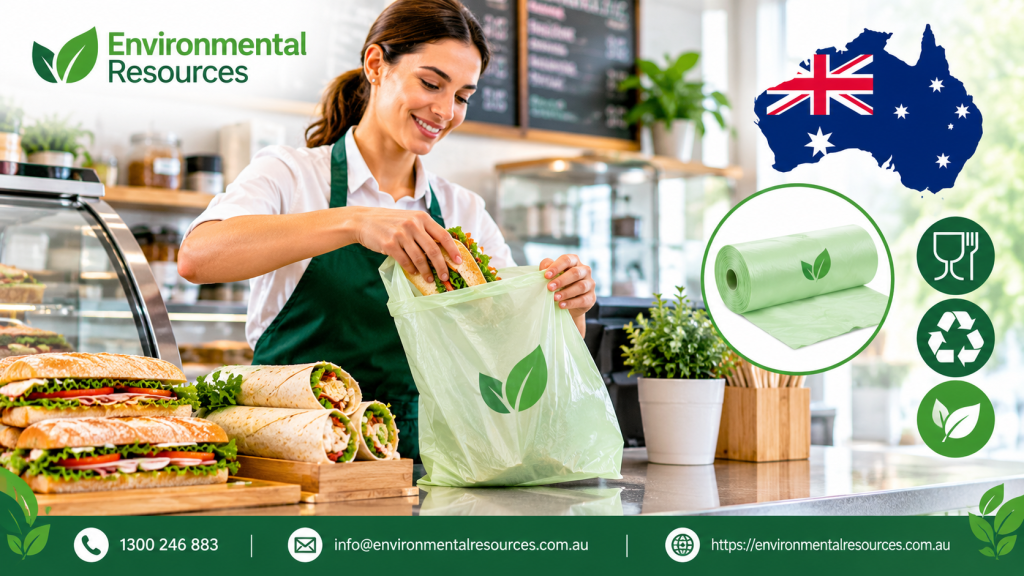
Australian delis, butcher shops, supermarkets, seafood retailers and food manufacturers need packaging that protects food, supports safe handling and meets the requirements of their target markets. Choosing an unsuitable bag can create food safety risks, complicate purchasing decisions and leave businesses unprepared for state-specific plastic restrictions.
To manage deli bag compliance Australia requirements, businesses need to understand food-contact safety, migration testing, packaging suitability and regulations governing single-use plastic bags.
Environmental Resources supports Australian organisations seeking compostable and biodegradable packaging solutions. By understanding relevant standards and checking product documentation, food businesses can make informed packaging decisions while maintaining food safety and efficient daily operations.
What Does Deli Bag Compliance Australia Require?
Australia does not rely on one test or certificate to cover every type of deli bag. Businesses must consider applicable food safety requirements, material specifications and state or territory restrictions.
Under Standard 3.2.2 of the Australia New Zealand Food Standards Code, food businesses must choose packaging that suits its intended purpose, protects food and does not contaminate it. Poor hygiene, damaged materials and chemical migration under unsuitable conditions can introduce contaminants. Food Standards Australia New Zealand explains these requirements in its food packaging guidance.
For a deli, this means matching each bag to the food it will hold. A bag designed for dry bakery goods may not perform well with oily meats, moist seafood or acidic foods.
Businesses should assess:
- The type of food and its contact with the packaging.
- Storage temperatures and expected contact duration.
- Moisture, oil and acidity levels.
- Bag strength, sealing performance and intended use.
- Relevant food safety documentation and test results.
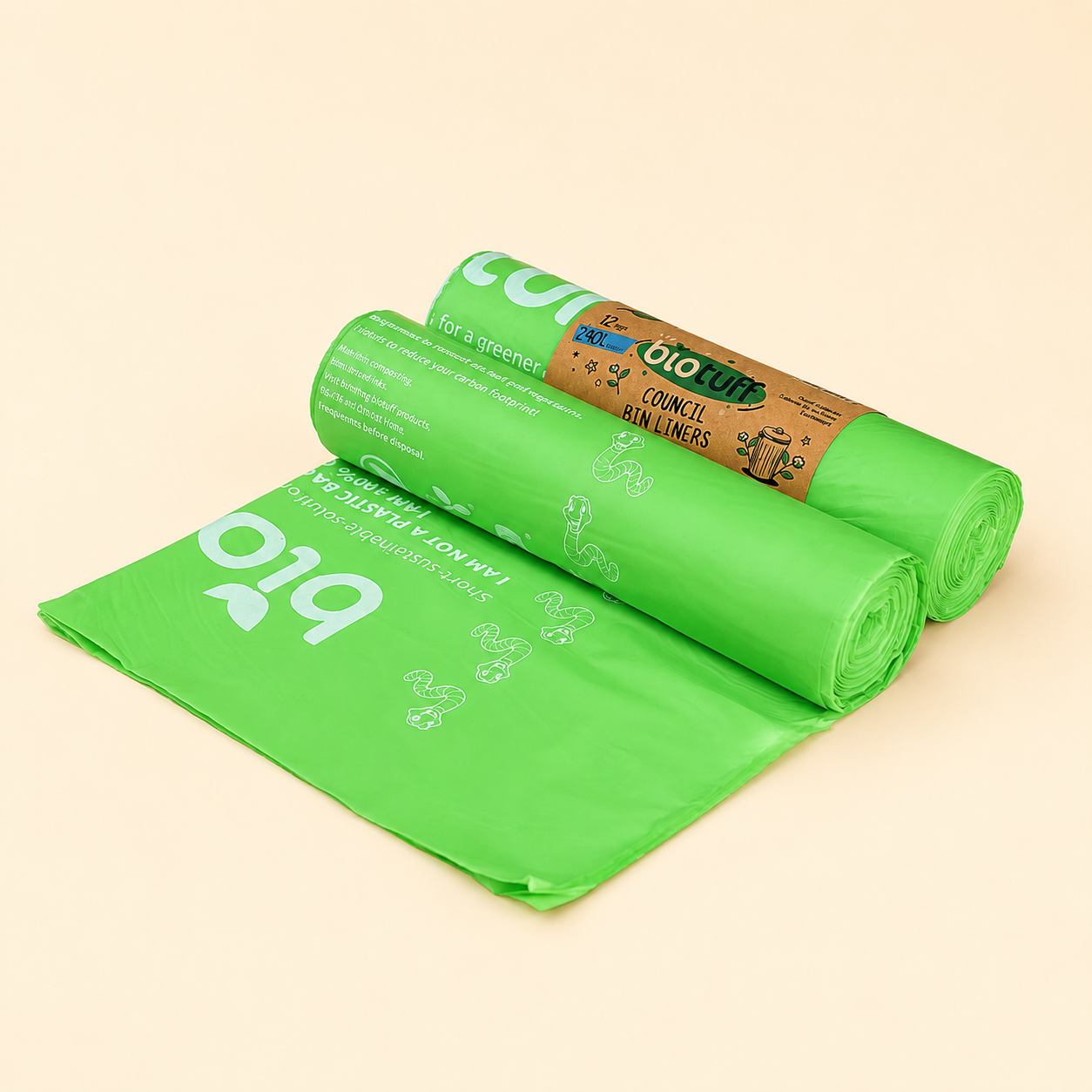
240L Council Bin Liners
Place your order for eco-friendly 240L Council Bin Liners At an affordable price only on Biotuff.
Understanding AS 2070 Compliance for Deli Bags
AS 2070 compliance is an important consideration when businesses evaluate plastic materials for food contact in Australia.
AS 2070:1999, Plastics materials for food contact use, provides guidance on plastic packaging, coatings, printing and other food-contact applications. It addresses material selection and manufacturing practices, drawing on relevant Australian requirements and overseas regulatory approaches.
However, AS 2070 does not impose a mandatory requirement on its own. Food businesses must still meet applicable food safety laws, including the obligation to choose packaging that suits its intended purpose. Manufacturers and buyers can use the standard to assess materials and develop an appropriate approach to food-contact safety. Read the FSANZ guidance on chemicals in food packaging.
When requesting AS 2070-related documentation, ask your supplier to explain the material specifications, test reports and intended-use conditions that support the product’s suitability.
Why Food Contact Material Migration Testing Matters
Food contact material migration testing examines whether substances from packaging can transfer into food or a suitable food simulant under specified conditions.
Businesses and suppliers use test results to assess whether packaging suits a particular application. The appropriate testing method depends on the material, food type, contact time and temperature.
For example, a deli bag used for chilled cheese may need a different assessment from one designed for acidic pickled vegetables or oily prepared foods.
What Is 3% Acetic Acid Migration Testing?
3% acetic acid migration testing uses a dilute acetic acid solution as a food simulant in certain food-contact testing protocols. Under the relevant EU plastics framework, this simulant represents acidic foods with a pH below 4.5.
The laboratory applies specified time and temperature conditions to assess whether substances migrate from the packaging into the simulant. These conditions must reflect the relevant testing requirements and foreseeable conditions of use. The European Commission explains its food-contact migration testing approach.
However, 3% acetic acid migration testing does not provide a universal assessment for every deli bag. A laboratory or packaging specialist must identify the appropriate simulants and test conditions for the material and food.
Before approving a bag, ask your supplier or testing laboratory to confirm:
- Which food types and packaging materials the assessment covers.
- Whether the test conditions match the intended temperature and contact duration.
- Which migration limits or criteria apply to your target market.
- Whether the report covers the finished bag or only a raw material.
- Whether the documentation supports the exact product you intend to purchase.
EU 10/2011 Food Packaging Compliance: Does It Apply in Australia?
EU 10/2011 food packaging compliance refers to European Union requirements for plastic materials and articles that come into contact with food.
The regulation establishes specific migration limits, an overall migration limit and requirements for supporting compliance documentation. It also defines food simulants and testing conditions for plastic food-contact materials. Consult the official EU Regulation 10/2011 text.
Australian food businesses need to distinguish European requirements from Australian obligations. EU Regulation 10/2011 does not automatically become an Australian legal requirement just because a supplier provides a report against it.
However, businesses may use EU testing and documentation to assess packaging or meet customer specifications, particularly when exporting products to international markets. They must still check Australian food safety requirements and any applicable state or territory rules.
South Australia Deli Bag Regulations: What Businesses Need to Know
South Australia deli bag regulations deserve particular attention because the state has introduced restrictions on several single-use plastic products.
From September 2024, South Australia prohibited non-AS-certified-compostable plastic barrier bags used for unpackaged fresh fruit, vegetables, nuts and confectionery. The rules also cover certain extra barrier bags that retail customers use to protect against leaks from pre-packaged meat, poultry, fish, seafood, herbs or flowers. Eligible AS-certified compostable bags must carry the required certification information.
The state will expand these restrictions from September 2027 to cover non-AS-certified-compostable plastic barrier bags used for unpackaged dairy products, meat, poultry, fish and seafood.
This change matters to delis, butchers and seafood retailers preparing for the next stage of the rules. Before changing your packaging range, check the official South Australian barrier bag guidance.
Businesses should not assume that every compostable bag suits every food application. They need to confirm that each product suits the food it will hold and meets the relevant state requirements.

Produce And Meat Storage Bags
Place your order for eco-friendly Produce And Meat Storage Bags At an affordable price only on Biotuff.
How Environmental Resources Supports Better Packaging Decisions
Environmental Resources supplies compostable and biodegradable products for Australian organisations reviewing their packaging and waste management needs.
When considering compostable deli or food bags, businesses should ask two separate questions: Does the bag suit direct contact with the intended food, and does its certification meet the applicable compostability or plastic restriction requirements?
These checks serve different purposes. Compostability certification alone does not prove that a bag suits every food-contact application. Similarly, migration test results do not establish that a bag meets a compostability standard or a state plastic restriction.
Visit Environmental Resources to explore the product range and discuss the documentation your packaging requirements may call for.
Frequently Asked Questions
- Is AS 2070 mandatory for deli bags in Australia?
AS 2070:1999 provides guidance on plastic materials for food-contact applications, but the standard does not impose a mandatory requirement on its own. Businesses must still comply with applicable food safety laws and choose packaging that suits its intended use.
- What does 3% acetic acid migration testing show?
The test helps assess whether substances migrate from packaging under specified conditions using an acidic food simulant. Under EU plastics rules, 3% acetic acid represents acidic foods with a pH below 4.5. The results do not automatically establish suitability for every food or packaging application.
- Does EU 10/2011 compliance satisfy Australian requirements?
Not automatically. EU 10/2011 applies to plastic food-contact materials within its European scope. Australian businesses must also consider Australian food safety requirements and any applicable state or territory rules.
- What should South Australian delis check before buying compostable barrier bags?
Check the current state requirements, the bag’s certification and labelling, and its suitability for the food it will hold. Businesses handling unpackaged dairy, meat, poultry, fish or seafood should prepare for the scheduled expansion on September 2027.
- Does compostability certification prove a deli bag is food-safe?
No. Compostability certification assesses a product’s compostability under the relevant standard. Businesses must separately assess food-contact suitability, intended conditions of use and supporting safety documentation.
Final Thought
Deli bag compliance Australia businesses need to manage involves more than choosing a bag labelled food-safe or compostable. Food retailers should assess AS 2070 compliance, select appropriate food contact material migration testing, and understand when 3% acetic acid migration testing or EU 10/2011 food packaging compliance may help them evaluate packaging.
For businesses preparing for South Australia deli bag regulations, reviewing certification, labelling and product suitability early can simplify packaging changes. Environmental Resources offers a starting point for exploring compostable packaging options while helping businesses make informed purchasing decisions and support more responsible product choices.

The Environmental Resources Editorial Team creates informative, research-based content covering compostable products, sustainable packaging, waste management, and environmental solutions. As an Australian-owned family business, Environmental Resources is committed to helping businesses, councils, and communities make informed, sustainable choices. The team shares industry knowledge, product information, and practical guidance to support responsible waste management and a more sustainable future.