
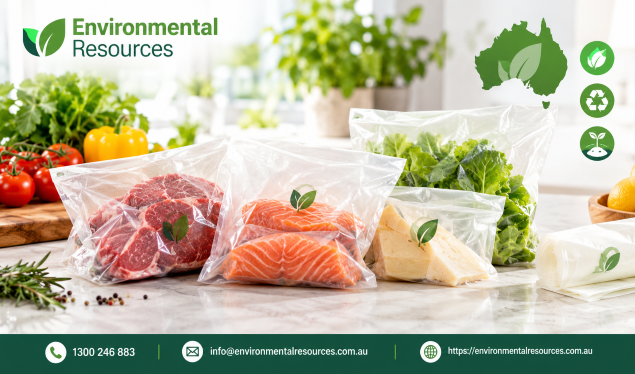
The food and retail industries are undergoing an important shift away from traditional single-use plastics. From supermarkets and delis to butchers and seafood retailers, businesses are increasingly looking for packaging solutions that combine food protection, practical performance and environmental responsibility.
Compostable deli storage bags are one option being considered as businesses review their packaging strategies, particularly as Western Australia introduces further restrictions on non-compostable plastic barrier bags.
Why Are Compostable Deli Bags Becoming Important?
Conventional plastic bags have traditionally been used for a wide range of food applications because they are lightweight, flexible, durable and inexpensive. However, their end-of-life impact has encouraged businesses, governments and consumers to look for alternatives.
Compostable packaging is designed to provide a different end-of-life pathway when the product is appropriately certified and processed under suitable composting conditions.
Environmental Resources supplies certified compostable products for commercial, retail and household applications, including compostable food storage and produce bags. The company also provides sustainable packaging solutions for councils, retailers, hospitality businesses and other organisations.
Applications for Compostable Deli Storage Bags
The potential applications for compostable food bags vary depending on the product’s specifications and certification.
Potential applications include:
- Deli and food-counter packaging
- Fresh food storage
- Meat and seafood applications where the product is specifically suitable
- Dairy-related food packaging where applicable
- Supermarket and grocery applications
- Food preparation and portioning
- Household food storage
- Organic-waste collection where the bag is approved for the relevant system
For commercial food businesses, choosing packaging based on the actual food application is essential. Meat, seafood and dairy can have different requirements from dry goods because of moisture, oils, fats and temperature conditions.
Food Standards Australia New Zealand advises food businesses to use packaging that is fit for its intended purpose and suitable for the conditions to which it will be exposed.
Western Australia’s New Barrier Bag Requirements
Western Australia has introduced its Plan for Plastics in stages.
Non-compostable plastic produce bags for loose fruit and vegetables were banned from 2024. Restrictions were subsequently expanded to additional products, with the next significant stage applying to wet-protein applications.
From 1 October 2026, the restrictions extend to non-compostable plastic barrier bags used for loose or unpackaged meat, seafood and dairy products. The WA Government has also established a design standard for compostable barrier bags used within the relevant applications.
This change is particularly relevant to butchers, seafood businesses, delis, supermarkets and other retailers supplying affected unpackaged products.
The WA Government recommends that businesses first consider reusable containers and other suitable alternatives. Where a disposable option is required, compliant compostable barrier bags may be used where appropriate.

Produce And Meat Storage Bags
Biodegradable and Compostable Produce and meat bag with translucent base colour, manufactured using renewable resources, plant base thermoplastic corn starch resins.
Compostable Does Not Mean One Product Fits Every Application
One of the most important considerations when moving to compostable packaging is product suitability.
A bag designed for dry produce may not necessarily be suitable for raw meat, seafood or other wet and oily foods. The WA Government specifically recommends that businesses confirm with suppliers that a compostable barrier bag is functional for the intended product, including wet or oily foods.
Businesses should consider:
- Food-contact suitability
- Moisture and oil resistance
- Strength and puncture resistance
- Storage temperature
- Intended storage duration
- Compostability certification
- Applicable Australian Standards
- Local waste and FOGO requirements
- Labelling and disposal instructions
Taking these factors into account helps businesses choose packaging based on performance rather than simply selecting a product because it is labelled “eco-friendly.”
The Importance of Australian Compostability Standards
Certification is an important part of responsible compostable packaging.
Environmental Resources states that its compostable range is certified to Australian standards including AS 4736 and AS 5810, covering relevant commercial and home compostability applications.
These standards help distinguish certified compostable products from products that may simply use environmental claims without appropriate independent verification.
Businesses should always check the certification and intended use of the specific product they are purchasing.

Produce Bag- Semi Transparent Bag with Star Seal Gusset
Biodegradable and Compostable Produce bag in translucent and green base colour, manufactured using renewable resources, plant base thermoplastic corn starch resins.
Supporting the Circular Economy
The benefits of compostable packaging extend beyond replacing conventional plastic. Where certified compostable products are accepted within an appropriate organic-waste system, they can contribute to the diversion of food-related waste from landfill.
Australia has already seen examples of compostable bags being used as kitchen caddy liners to help households collect food waste for FOGO systems. A government case study reported that a South Australian supermarket trial increased the proportion of food waste being recycled into compost rather than sent to landfill.
However, compostable products should only enter composting systems that accept them. Correct disposal is an important part of achieving the intended environmental benefit.
A More Considered Approach to Food Packaging
The move towards sustainable food packaging is not simply about replacing one bag with another. It is about selecting packaging that is fit for purpose, appropriately certified and compatible with the intended end-of-life pathway.
For businesses operating in Western Australia, the 1 October 2026 changes provide an important reason to review current barrier-bag practices for meat, seafood and dairy products.
Compostable deli storage bags can form part of this transition where they meet the applicable requirements and are suitable for the intended food application.
Environmental Resources is committed to supplying certified sustainable products that help Australian businesses, councils and organisations reduce their reliance on conventional plastics and move towards more responsible packaging solutions.