Universities sit in an unusual position when it comes to sustainability. They’re expected to run efficient, cost-conscious operations, but they’re also research institutions with staff, students, and boards who read the fine print. A vague sustainability claim won’t get past a university procurement team the way it might slide through in other sectors. That’s why sourcing compostable waste bags university campus programs can rely on needs to be treated as a genuine procurement exercise, not a box-ticking purchase.
At Environmental Resources, we work with sustainability teams across the higher education sector to help them source certified, fit-for-purpose compostable products that hold up under scrutiny from facilities staff, from auditors, and from the students who’ll call out greenwashing the moment they spot it.
Why Campuses Are Prioritising Compostable Waste Bags
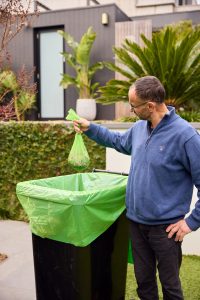
A university campus is really a small city. Food courts, libraries, laboratories, student residences, and administrative offices all generate different waste streams, and a large share of it is organic. compostable waste bags university campus programs address this directly by diverting food and garden organics away from landfill and into commercial composting, rather than letting it sit in a general waste bin for years.
There’s also a compliance angle that’s becoming harder to ignore. Several states now have FOGO (Food Organics and Garden Organics) mandates either in place or on the horizon, and universities that get ahead of these requirements avoid the scramble that comes with last-minute compliance.
The Mandate Landscape Procurement Teams Need to Know
Australia’s waste regulations are shifting fast, and universities often operating across multiple campuses and sometimes multiple states need to plan for varying timelines. Rather than treating each site as a separate problem, most sustainability teams find it easier to standardise on one certified compostable waste bags university campus solution across every location, then adjust rollout timing to match each state’s mandate.
This approach also simplifies staff training, signage, and supplier relationships. Instead of managing five different products for five different campuses, procurement teams deal with one supplier, one certification standard, and one consistent message to students and staff.
Certification: What Procurement Teams Should Actually Check
Not every product marketed as “eco-friendly” or “biodegradable” is genuinely compostable, and universities with research-literate staff and increasingly sceptical students are exactly the audience that will ask for proof.
Every item in our compostable range is certified to AS 4736 and AS 5810, the nationally recognised benchmarks for commercial and home compostability. This matters for two reasons:
- It confirms the product will actually break down in a commercial composting facility, not just sit in landfill under a green label
- It gives procurement teams a defensible, auditable standard to point to in tender documents, sustainability reports, and student-facing communications
For a research institution, that second point carries real weight. A claim that can’t be verified is a liability; a certified standard is evidence.
Building the Business Case for ESG Reporting
Sustainability teams don’t just need a good product they need a good story for the university’s ESG report. Compostable waste bags university campus procurement fits neatly into several reporting categories: landfill diversion volumes, Scope 3 emissions reduction from organic waste, and progress against institutional sustainability targets.
A few things make the reporting side easier:
- Request usage and diversion data from your supplier at the point of purchase, not after the fact.
- Track contamination rates in your organics stream, since clean diversion numbers matter more to auditors than raw tonnage.
- Tie procurement decisions directly to certification standards (AS 4736 and AS 5810) in your reporting language, so the claims are backed by something concrete.
- Include student engagement metrics where possible participation in a compostable waste program is often as valuable to a report as the waste diversion figures themselves.
Rolling Out Across a Multi-Campus Environment
Universities rarely have the luxury of a single, uniform site. Food courts, libraries, laboratories, and residential colleges all need different bin sizes and liner strengths, and rollout timing often has to work around academic semesters rather than calendar quarters.
Most sustainability teams find it easier to pilot in one high-traffic area a food court or a student union building before expanding to the rest of campus. This mirrors how hospitals and councils have approached similar rollouts, and it gives procurement teams real usage data before committing to a full-site order.
For product ranges built specifically for higher education environments, our campus solutions outline the full line-up, from public bin liners and retail bags to compostable food waste liners for canteens and event-grade rubbish bags for student activities.
Frequently Asked Questions
1. What makes compostable waste bags suitable for university campuses specifically?
Campus environments combine food courts, offices, labs, and residences, so products need to handle high volume and varied waste types while still meeting a consistent certification standard across the whole site.
2. How do compostable waste bags support university ESG reporting?
They generate measurable landfill diversion and organics recovery data; which sustainability teams can use directly in emissions reporting and progress tracking against institutional targets.
3. What certification should procurement teams look for?
Look for AS 4736 (commercial compostability) and AS 5810 (home compostability), as these are the recognised Australian benchmarks that confirm genuine compostability rather than a marketing claim.
4. Can one compostable waste bag solution work across multiple campuses?
Yes, most universities standardise on a single certified product line across all sites, then adjust rollout timing to match each state’s FOGO mandate and each campus’s academic calendar.
5. How long does a full-campus rollout usually take?
Pilots in a single high-traffic building typically run for four to six weeks before expanding, with a full multi-campus rollout often taking one to two academic terms depending on scale.
Final Thought
Procuring compostable waste bags university campus teams can genuinely stand behind isn’t just about landfill diversion it’s about being able to defend every claim in a tender document, a sustainability report, or a student’s pointed question at an open day. Certification, consistent rollout planning, and clear reporting data are what turn a waste management purchase into a credible sustainability outcome. Environmental Resources works alongside university sustainability teams to make that process straightforward, from initial procurement through to full multi-campus implementation.